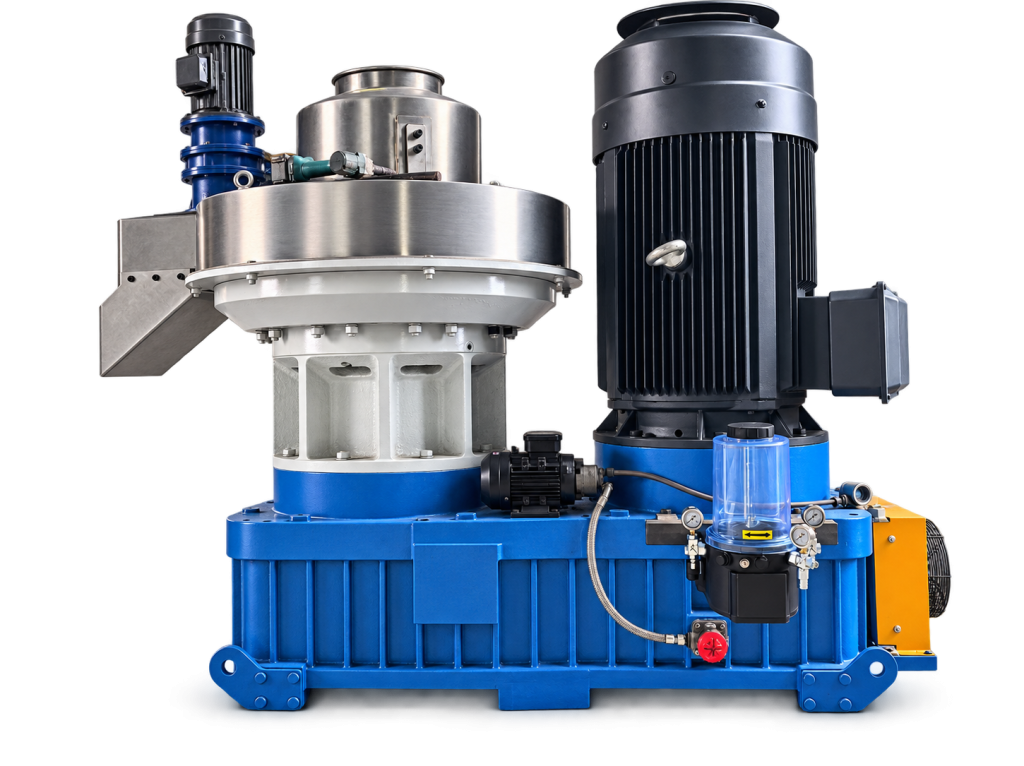
Vertical Ring Die Pellet Mill

Biomass pelletizing with 96%+ forming rate and 15% lower energy consumption.

★★★★★Trusted by 500+ customers|Trial run with your material before dispatch
  • 96%+ forming rate — dense, well-formed pellets
  • About 15% lower energy use per ton of pellets
  • Vertical layout, low center of gravity, stable long runs
  • Wear-resistant die & rollers, spare parts in stock
EX-FACTORY PRICE · configuration quote based on your material & capacity · reply within 30 minutes Get a free configuration quote → Call +86 137 8366 8119
  • Free material trial run
  • 48h engineer dispatch
  • Free repair during warranty
  • Parts shipped in 48h
500+Customer projects
2000Sets annual capacity
48hEngineer on-site
01

How it works

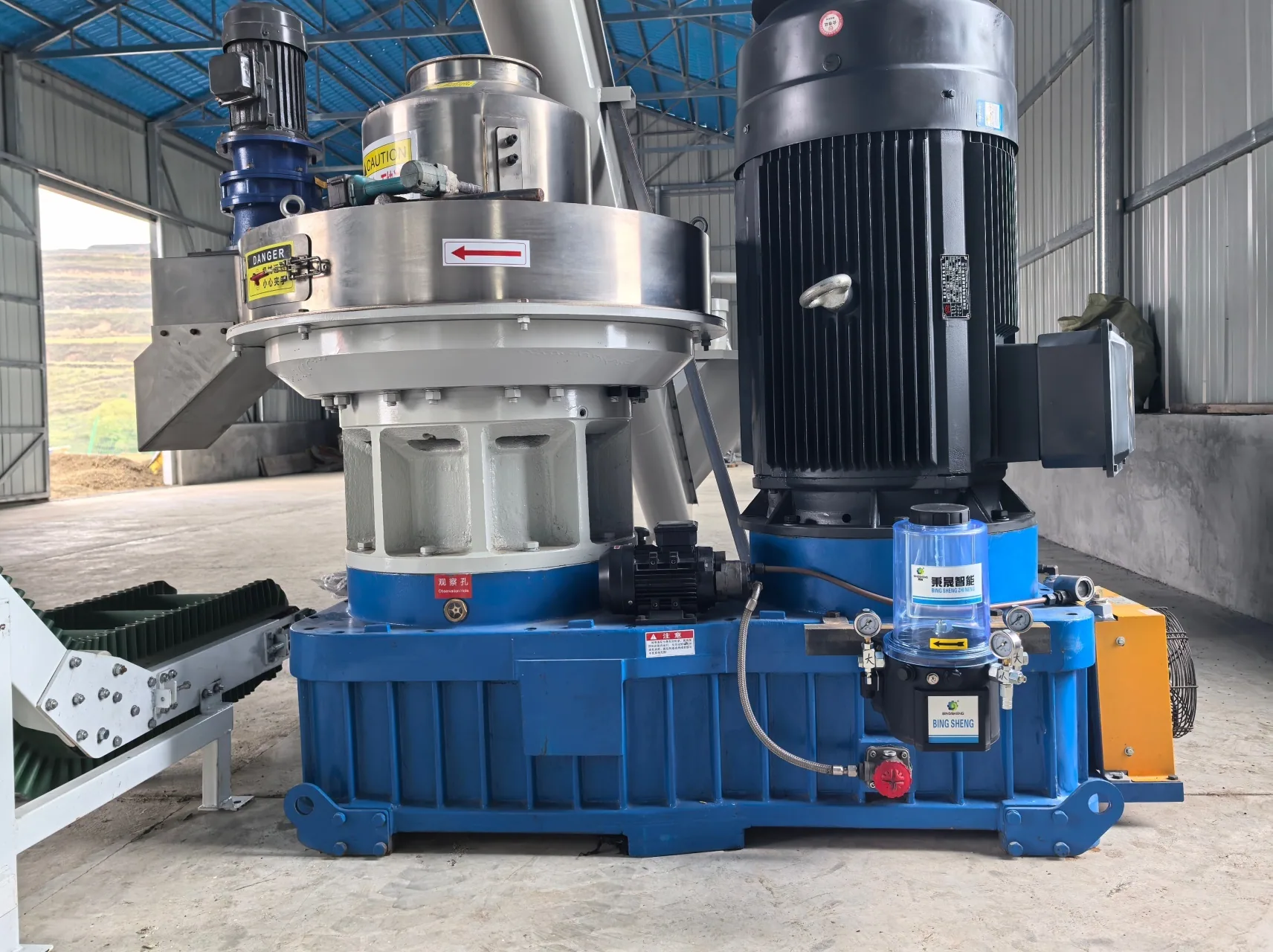
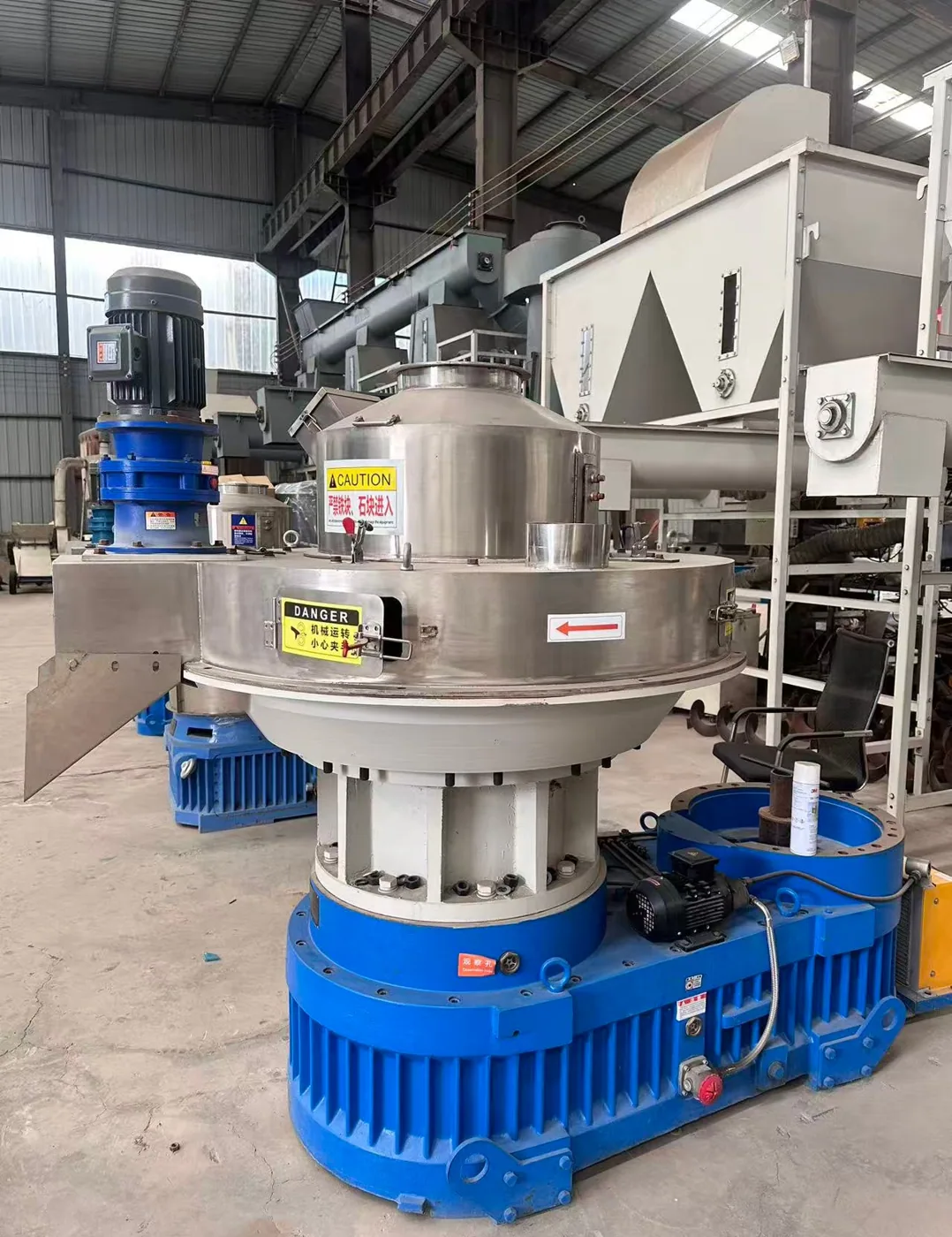
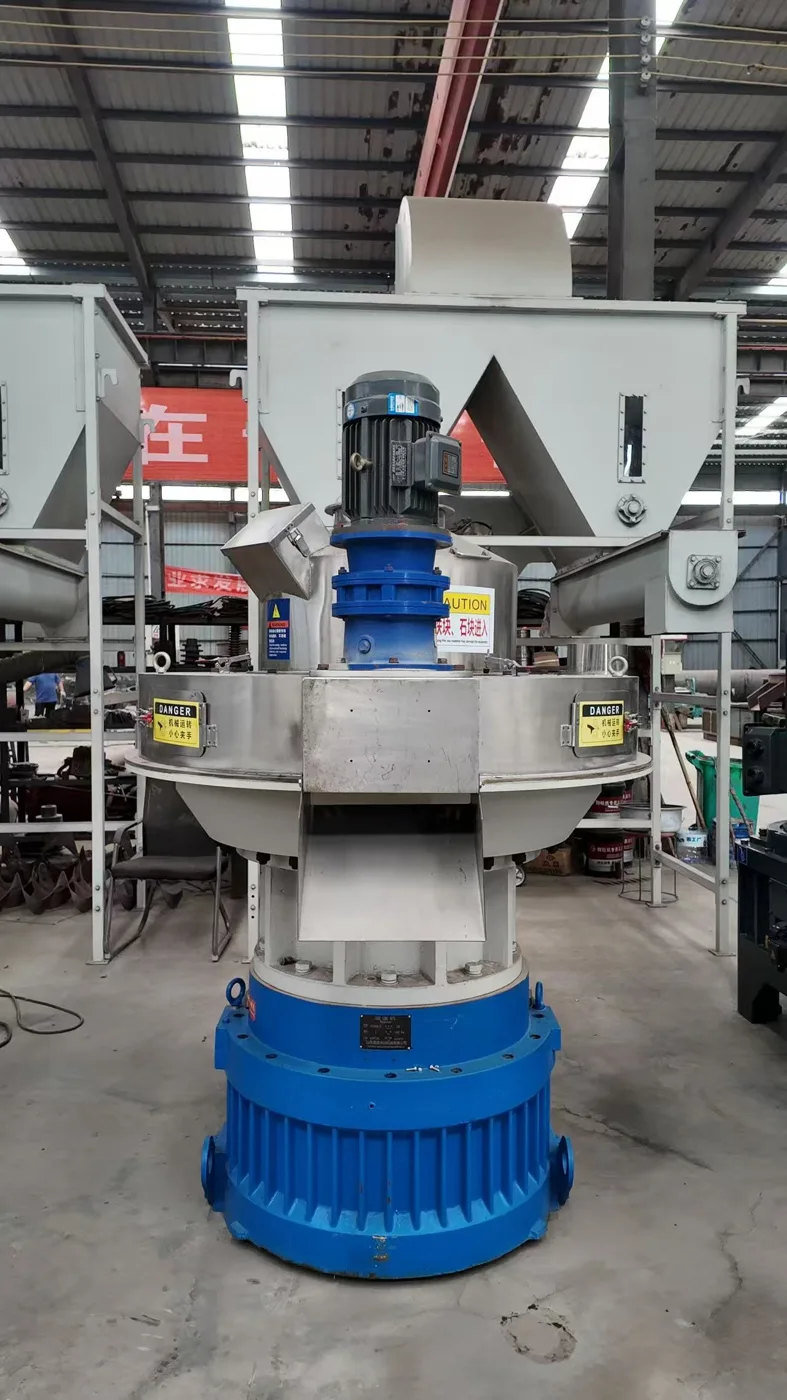
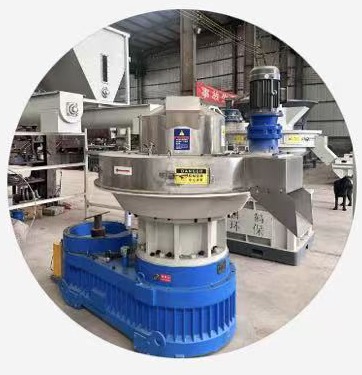
Conditioned sawdust, straw and other biomass enter the vertical ring die chamber, where rollers press the material through the die holes. Under pressure and friction it compresses into dense 6–12 mm pellets, cut to length by knives. The vertical layout keeps the center of gravity low and feeding even; with our self-developed forming chamber the pelletizing rate stays above 96% with about 15% lower energy use.
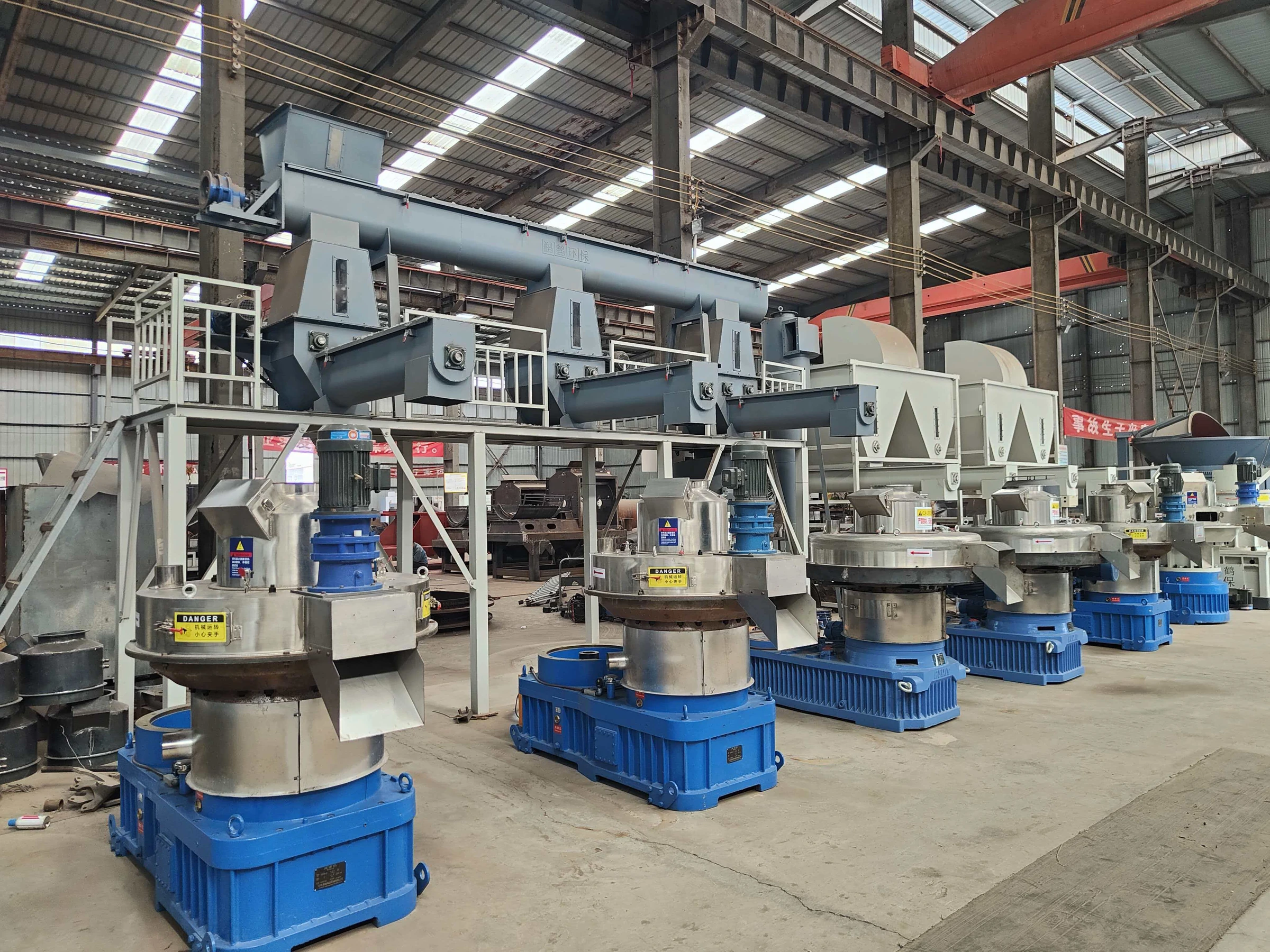
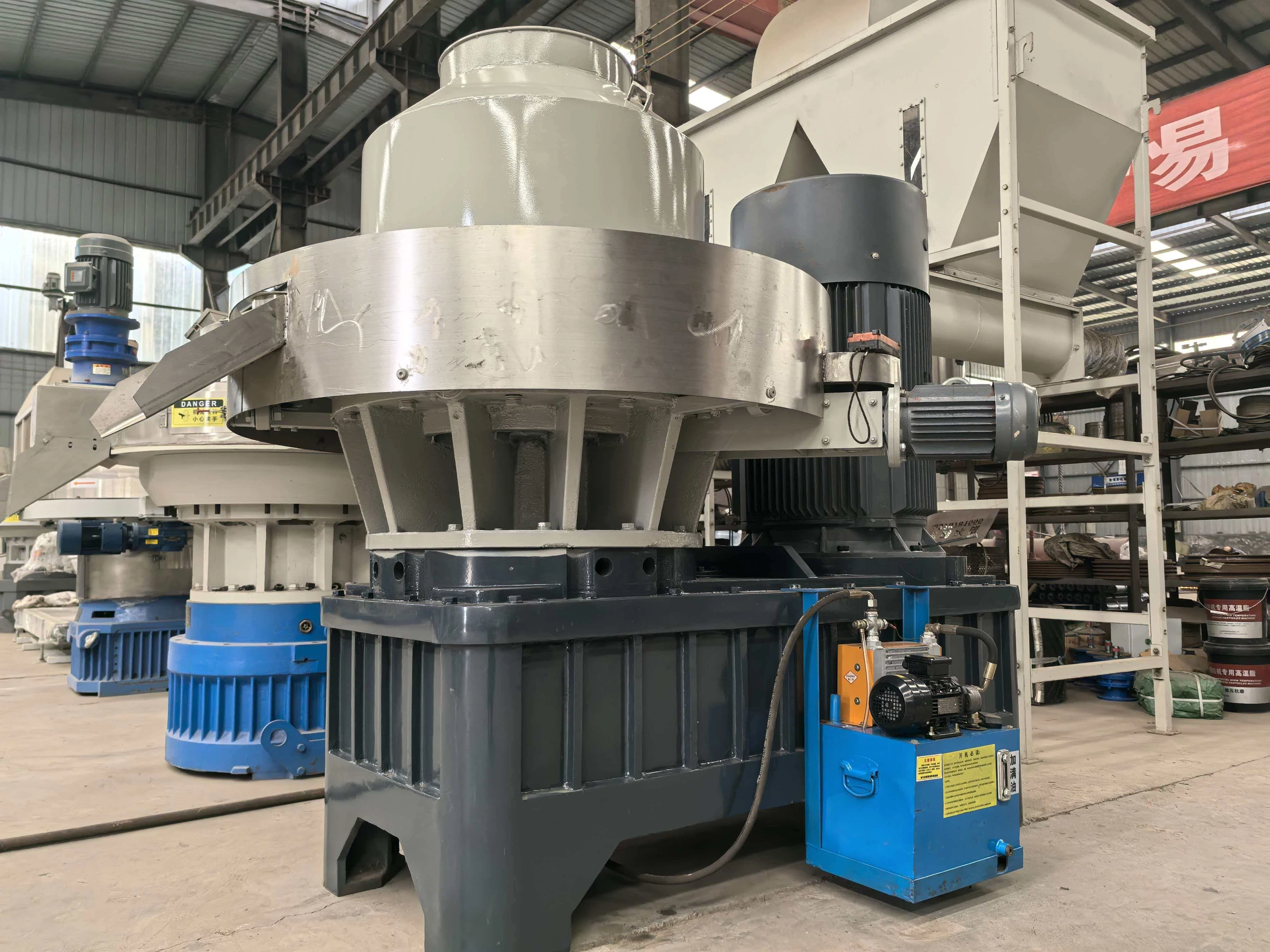
Penghe Machinery complete production line
Penghe Machinery · production line
02 / APPLICATIONS

Applications

Where this machine fits in a production line:

  • Biomass fuel pellet plants
  • Crop-residue utilization projects
  • Sawmill by-product recycling
  • Agricultural & forestry waste-to-energy
  • Small pellet workshops scaling up
03 / SELECTION GUIDE

What to check before you buy

Don't shop by catalogue capacity alone — confirm these three things first:

  1. 01Match the die to the material

    Wood sawdust uses standard 6–8 mm compression-ratio dies; straw and rice husk need higher compression ratios and finer pre-grinding.

  2. 02Size by target capacity

    Model 470: 0.8–1 t/h, 580: 1.5–2 t/h, 700: 2.5–3 t/h, 850: 3–4 t/h — choose with 10–20% headroom over your target.

  3. 03Moisture decides success

    Keep infeed moisture at 12%–18%; too wet needs drying first, too dry needs conditioning. A trial run nails the parameters in one go.

TECHNICAL PARAMETERS

Vertical Ring Die Pellet Mill — Specifications

ModelPower(kW)Output(t/h)Pellet Size(mm)Dimensions(m)Weight(t)
470750.8–1φ6–φ122 × 1 × 1.74
5801321.5–2φ6–φ122.3 × 1.2 × 25
7001602.5–3φ6–φ122.6 × 1.3 × 27.5
8502503–4φ6–φ123 × 1.4 × 2.411

Catalogue values for reference. Actual output depends on material, moisture and configuration — a trial run with your material settles the real numbers.

REAL EQUIPMENT

Machine Photos

REAL MACHINE IN ACTION

Machine running & delivery footage

No promotional edits — real footage from customer sites and our factory floor.

On-site trial run: pellet discharge in real production

Vertical ring die pellet mill running at a customer site — dense, well-formed pellets discharging continuously.

Complete pellet production line running at customer site

A 32-second continuous shot of a complete pellet line at a customer site — conveying, pelletizing and discharge in real operation.

Pellet mill loading for delivery

Vertical ring die pellet mill being loaded and secured for shipment to the customer site.

FAQ

Vertical Ring Die Pellet Mill — FAQ

The questions buyers ask most before choosing a model.

What moisture content does the pellet mill require?

12%–18% is ideal. Material that is too wet must be dried first; material that is too dry needs conditioning. We recommend a trial run with your actual raw material before choosing a model.

Should I start with a single machine or a complete line?

It depends on your raw material. Fine, correctly dried material can start with a single pellet mill; logs and straw need chipping, crushing or drying first. We configure based on your material, not on what we want to sell.

Why is the actual output lower than the catalogue figure?

Catalogue figures are standard-condition references. Real output depends on material type, moisture and particle size. We calculate capacity with your actual material — and can prove it in a trial run.

How often do the die and rollers need replacement?

They are normal wear parts, typically several hundred to a thousand operating hours depending on material cleanliness. Wear parts are in stock and can be shipped within 48 hours.

CUSTOMER FEEDBACK

What customers say

Real feedback from project sites and follow-up visits.

★★★★★
“The whole line has been running normally in the plant — you can see the output stability with your own eyes.”
Biomass pellet plant customerComplete pellet production line in operation
★★★★★
“They ran a trial with our material before recommending a model — and talked us out of the wrong one. That earned our trust.”
Straw utilization project customerTongwei, Gansu
★★★★★
“Installation to first discharge in three days, with their engineer on site for commissioning.”
Fuel pellet production customerSoutheast Asia project
START YOUR PROJECT

Start from your actual material,
and lock in the right configuration.

Prepare the following before we talk — we can identify the machine and process combination much faster.

01 Raw material type02 Initial moisture03 Target capacity04 Site conditions
DIRECT CONSULTATIONEquipment Selection Advice

Talk to Penghe Machinery directly about your project.

+86 137 8366 8119 ↗Company address & full contact →
EQUIPMENT SELECTION ADVICE

Looking at the Vertical Ring Die Pellet Mill?

Tell us your raw material, target capacity and site conditions, and we will discuss a suitable configuration. Final parameters are confirmed in the technical proposal agreed by both parties.

Vertical Ring Die Pellet Mill · Factory directGet a quote